Marinades & Brines
Fish Marinade & Brine
↓ Jump to recipe
Prep
10 min
Cook
5 min (plus 2 hr brine time)
Total
2 hr 15 min
Serves
4 servings
A light salt brine seasons fish all the way through before it hits the heat, not just on the surface. The herb marinade works differently, coating the outside in aromatics that bloom into a crust when the fish meets the pan. Both live here depending on what the dish calls for.
Ingredients
- 450 ml (2 cups) water
- 2 tbsp kosher salt
- 1 tsp sugar
Instructions
- 1Combine water, salt, and sugar in a saucepan.
- 2Bring to a quick boil, stirring until fully dissolved.
- 3Remove from heat and cool completely. Refrigerate until cold.
- 4Submerge cleaned fish in cold brine. Refrigerate 2 hours.
- 5Remove, pat dry, and air-dry uncovered on a rack in the refrigerator 30–60 minutes before cooking.
Cook's Note
Never add fish to warm brine: it starts to cook. The brine must be completely cold before fish goes in. For the herb marinade, always stir the garlic in by hand after blending.
How to Use This
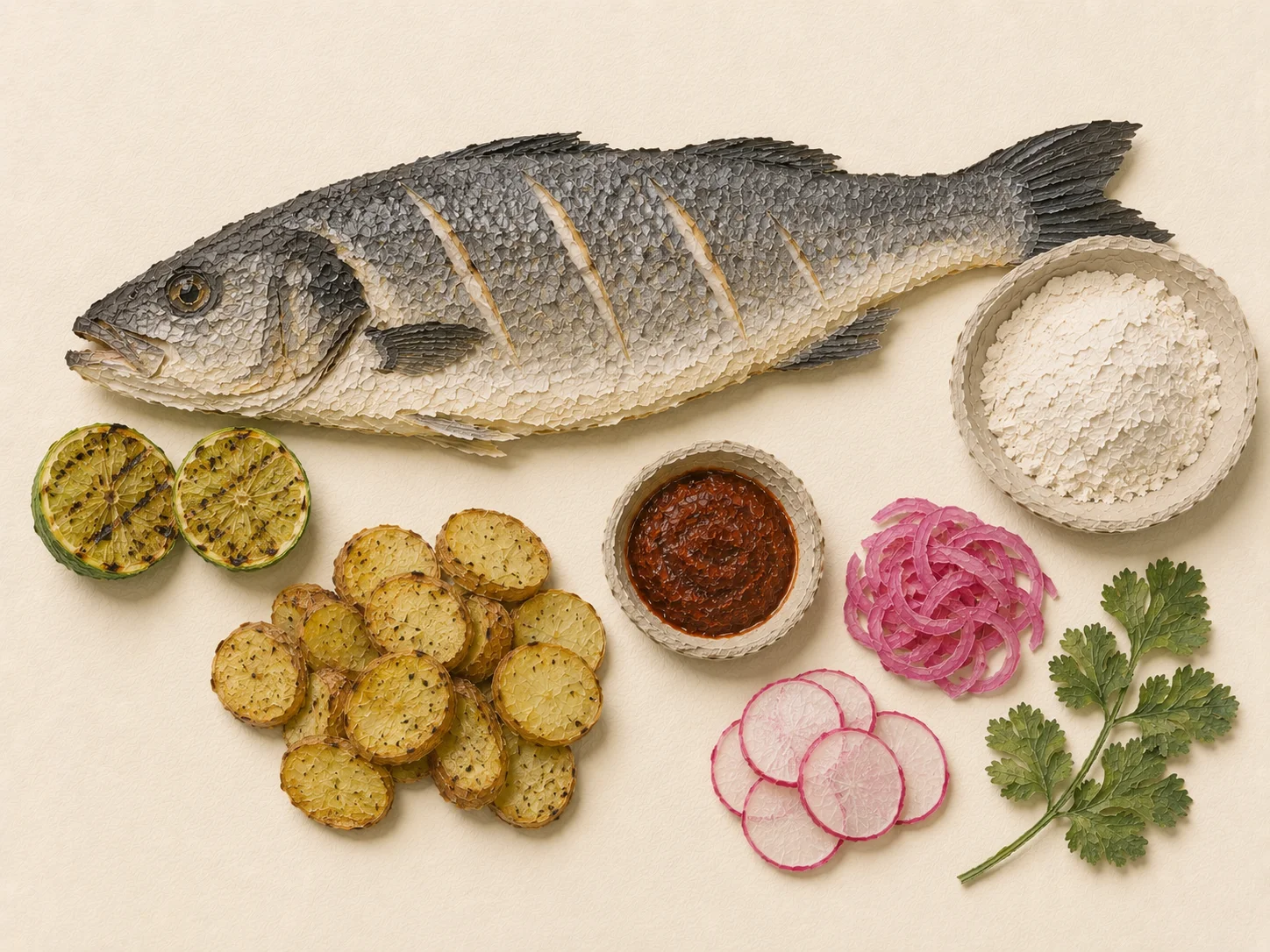
Brine whole fish or thick fillets (branzino, snapper, mahi mahi) before roasting, pan-searing, or grilling. Switch to the herb marinade when you want a crust of aromatics on the surface. For shrimp and smaller seafood going into tacos or ceviche, use the shrimp variant: 20–30 minutes, then straight to the heat.
Why This Foundation Works
Salt pulls into fish through osmosis and seasons the flesh from the inside. The small amount of sugar offsets the salt so the fish does not taste sharp when cooked. Air-drying after brining removes surface moisture so skin crisps instead of steaming. The herb marinade works in reverse: oil carries garlic and herbs directly onto the surface, where they cook into the fish on contact with the hot pan.
Make It Yours
- Herb marinade (whole fish, branzino): blend 1 bunch cilantro, 4 serranos, 1 green onion, 240 ml (1 cup) canola oil, 120 ml (½ cup) lime juice until smooth. Stir in 2 tbsp minced garlic by hand; blending garlic at high speed makes it bitter. Marinate 2–4 hours.
- Shrimp and seafood: toss 900 g (2 lb) cleaned shrimp with 2 tbsp minced garlic and 2 tbsp chopped cilantro. Marinate 20–30 minutes max. More than an hour and the garlic breaks down the texture.
- Aromatic brine: add a bay leaf, a few peppercorns, and a few lemon slices to the base brine for a more layered flavor.
- Swap serrano for jalapeño in the herb marinade for less heat. Avocado oil instead of canola gives a richer, less neutral result.
Leftover Strategy
Cannot be reused for raw fish. Discard after use.