Techniques
How to Build a Marinade or Brine
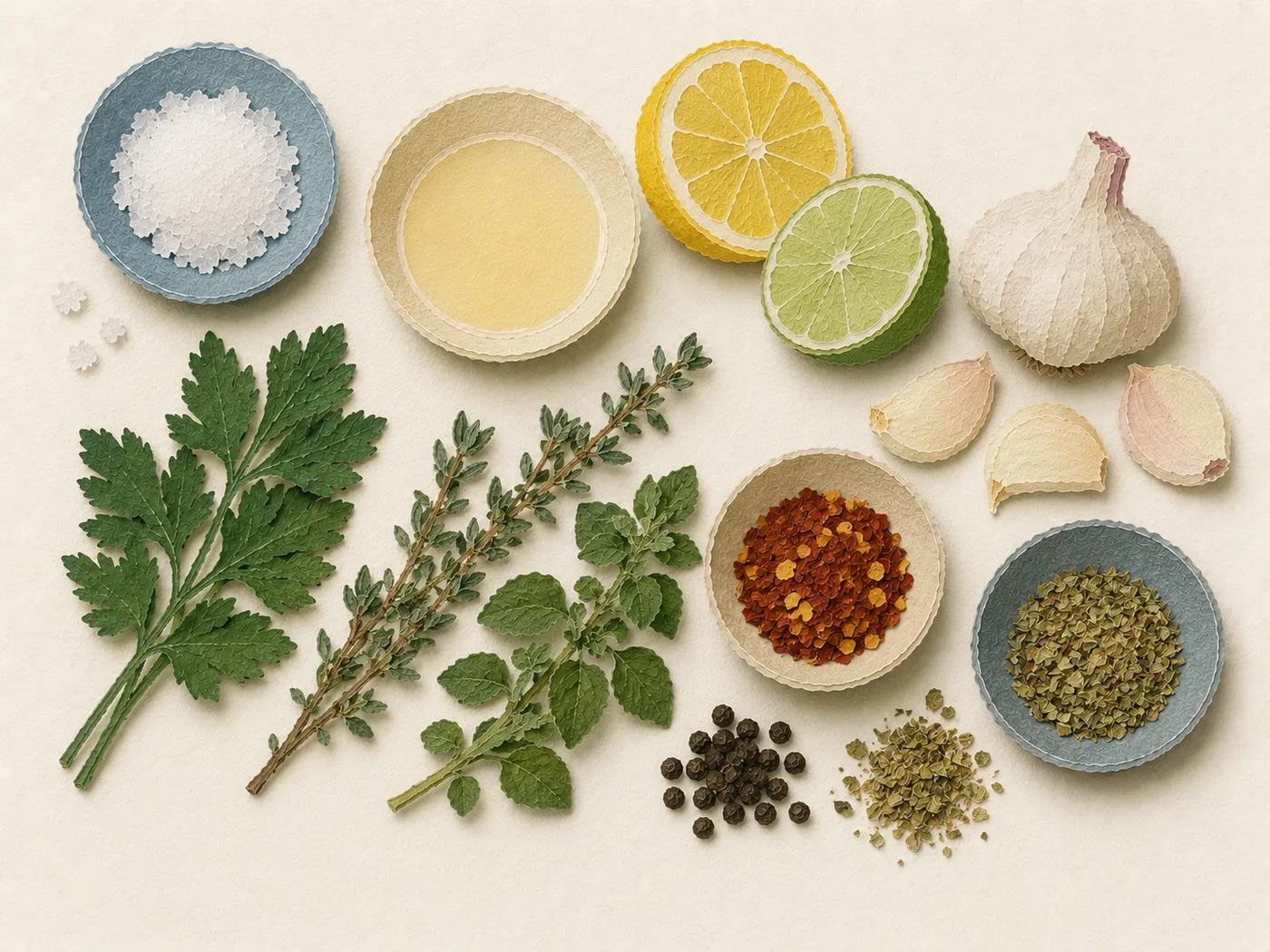
A marinade and a brine are both a soak before the heat, but they do different jobs. A marinade sits on the surface: acid, oil, and aromatics for flavor, with salt doing the deeper work. A brine is salt water that seasons a lean protein all the way through and helps it hold moisture. Knowing which one a dish needs, and for how long, is the whole skill.
Instructions
- 1Decide marinade or brine. Marinade for surface flavor and a little tenderizing (most grilled and roasted meats). Brine for seasoning deep and staying juicy (lean poultry, pork, and fish).
- 2Build a marinade on three parts: acid (citrus or vinegar) to brighten and lightly tenderize the surface, oil to carry the fat-soluble flavor of the aromatics, and salt, which is the only part that seasons below the surface. Add garlic, chile, herbs, and spices for character.
- 3Build a brine by dissolving salt, and often a little sugar, in water until it runs clear, then cool it fully before the protein goes in.
- 4Match the time to the protein. Fish, fifteen to thirty minutes. Chicken, two to four hours, or overnight for a mild, low-acid marinade. Pork and beef, two to eight hours; tough cuts up to twelve to twenty-four. Do not push an acidic marinade past its window.
- 5Keep it cold. Marinate and brine in the refrigerator, never on the counter, so the protein never sits in the danger zone.
- 6To use the mix as a sauce, set aside a clean portion before the raw protein touches it, or boil the used marinade first. Otherwise discard it.
- 7Lift the protein out, pat it dry, and let the surface come back before high heat, so it sears and browns instead of steaming.
Cook's Note
Always marinate and brine in the fridge, and always pat the protein dry before it hits the heat, or the surface steams and will not brown. Treat any marinade that touched raw meat as raw: discard it, or boil it before it goes anywhere near cooked food. If you want a sauce, reserve some before the meat goes in.
How to Use This
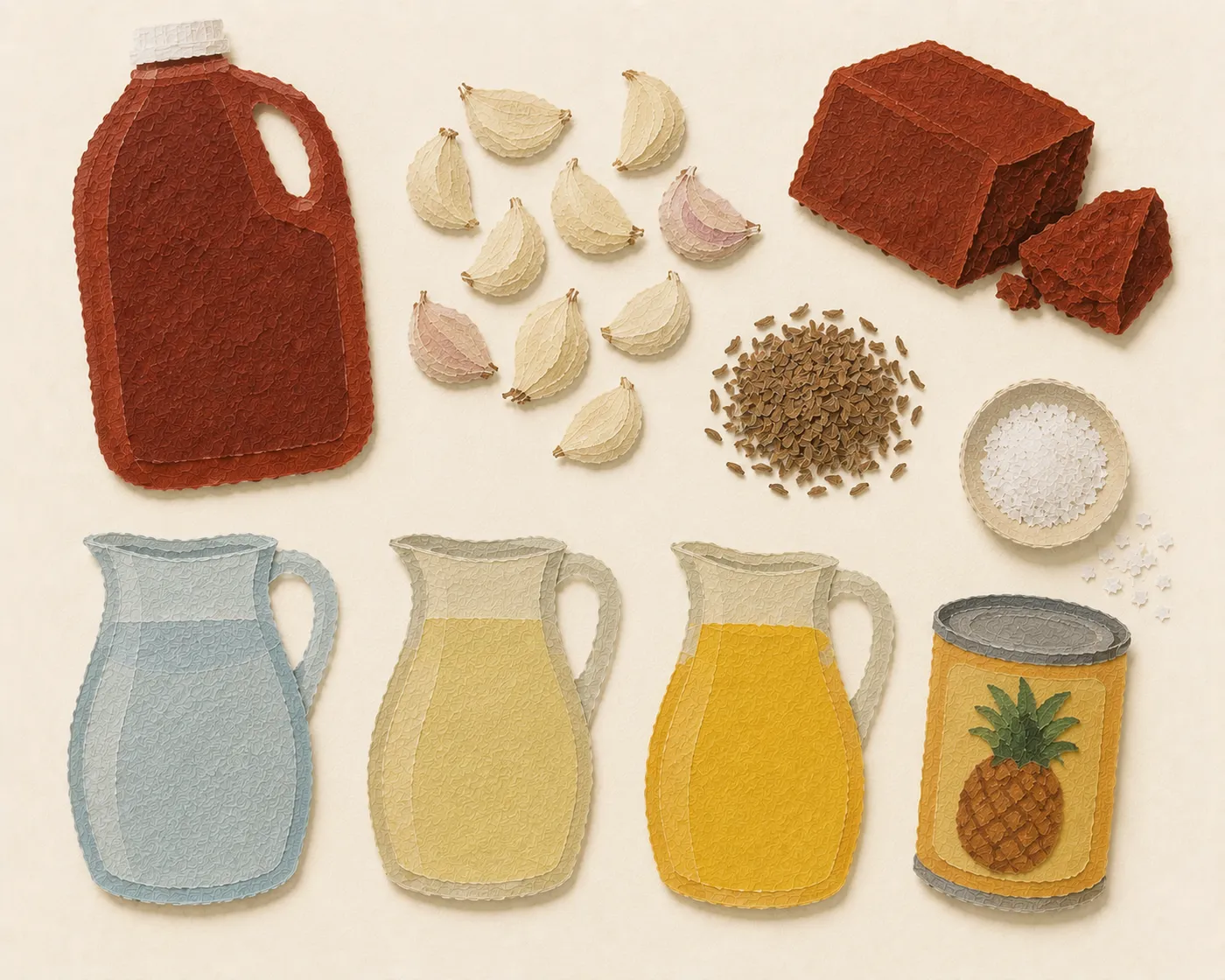
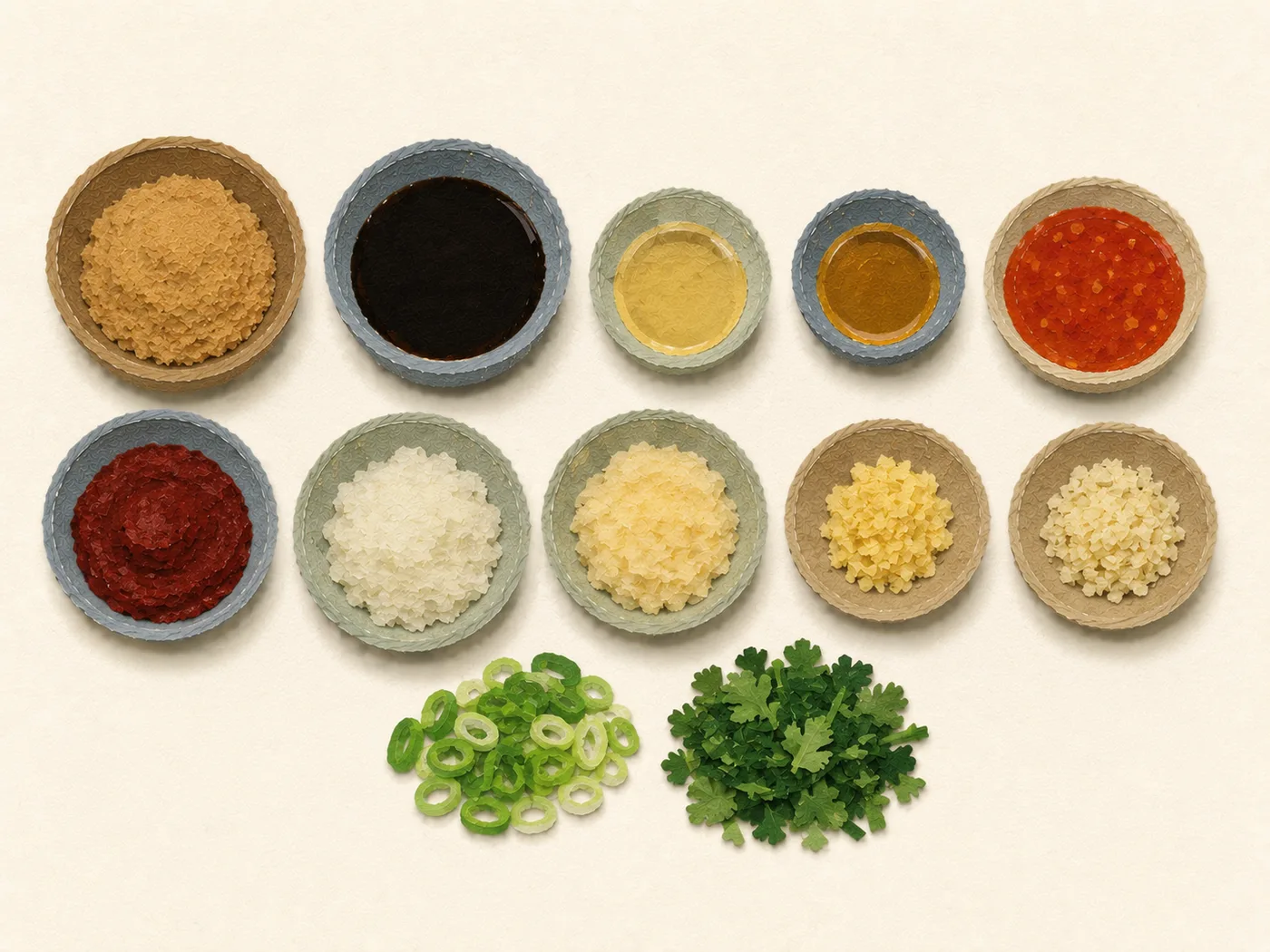
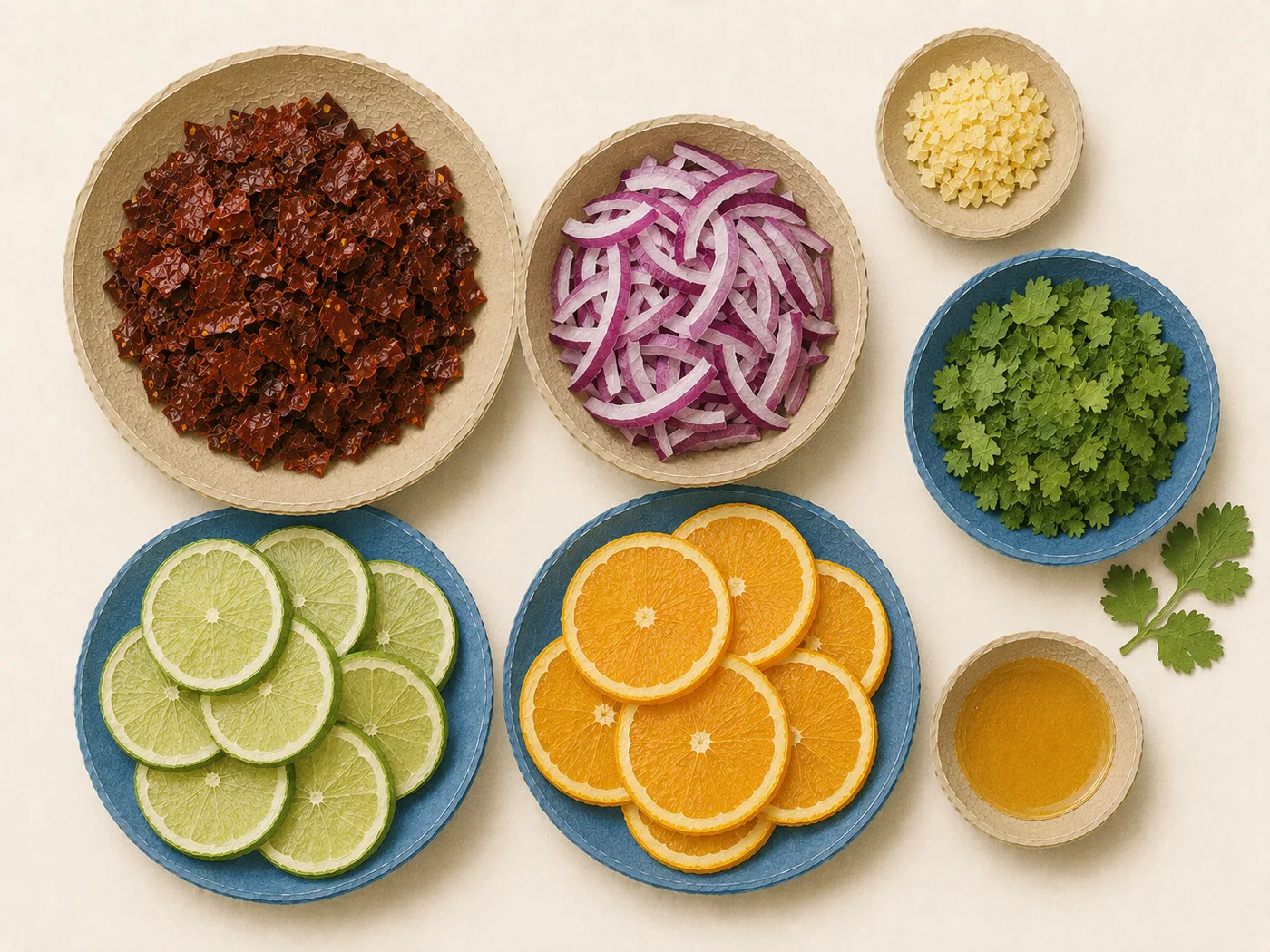
These marinades and brines back proteins across the site. All-Purpose Savory Marinade and Chicken Marinade are the everyday, low-acid soaks you can leave on longer. The Mexican chile marinades color as they flavor: Achiote Rub, Al Pastor Marinade, Carne Asada Marinade, and Chipotle Marinade. Duck Marinade and Kalbi Salad Marinade are the sweet, soy-forward side, and the kalbi leans on grated pear to tenderize overnight. On the brine side, Thanksgiving Turkey Brine and Pork Rib Brine season deep and keep the meat juicy, Buttermilk Brine soaks proteins before frying, and Fish Marinade & Brine covers both jobs for fish.
Why This Method Works
Each part of a marinade has one job. Acid denatures the proteins at the surface, which reads as tender, but left too long it goes past tender into mushy and chalky, so acid marinades have a ceiling. Oil does not tenderize; it dissolves the fat-soluble flavor in herbs and spices and carries it onto the meat. Salt is the one ingredient that truly penetrates: it pulls moisture out, then that seasoned liquid is drawn back in, carrying flavor below the surface. A brine works on that same salt principle at full scale, seasoning throughout and helping lean meat hold water so it does not dry out over the heat. Strong enzymatic tenderizers like pineapple, papaya, kiwi, and grated pear cut proteins fast, so they belong in short windows only.
Make It Yours
- Base ratio: about three parts oil to one part acid, salt to taste, then load the aromatics.
- Dry brine: for crisp skin, salt the surface and rest the protein uncovered in the fridge instead of using a wet brine.
- Sweet and soy: soy sauce, a little sugar or honey, ginger, and garlic for a sticky, dark crust.
- Chile and citrus: dried or fresh chile with lime or orange for a Mexican-style marinade that colors the meat.
- Tough cuts: a short soak with a grated enzyme fruit (pear, pineapple) tenderizes fast, but keep it brief.