Techniques
How to Cure Fish and Shrimp in Citrus (Ceviche and Aguachile)
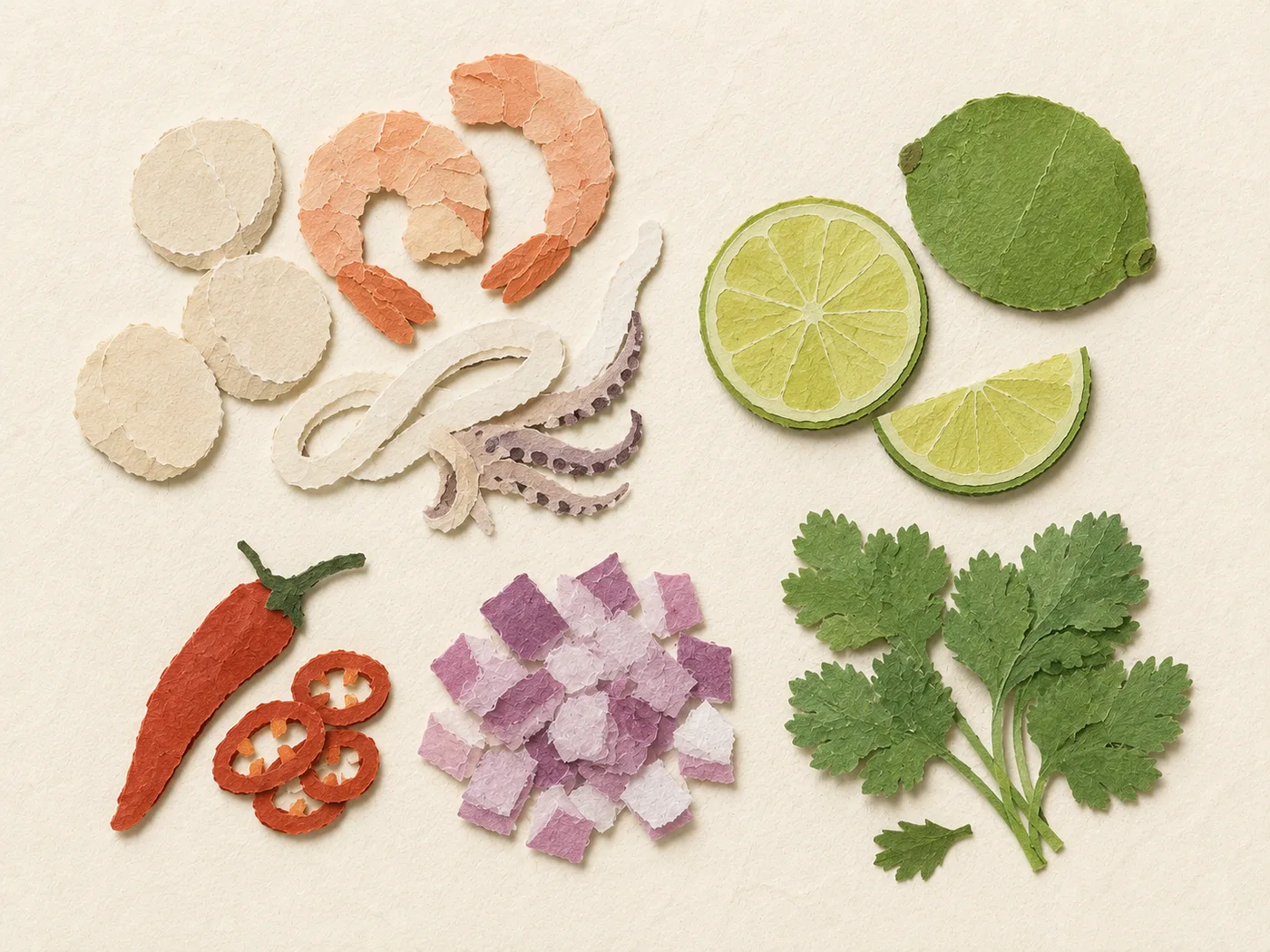
Ceviche and aguachile "cook" raw seafood without heat. The citric acid in lime juice denatures the proteins in fish and shrimp, so the flesh firms up and turns opaque the same way it would in a hot pan. It is a two-part method: cut the seafood small and even, then bathe it in fresh citrus just long enough to set the outside while the center stays tender. Aguachile takes this further, curing the shrimp for only a few minutes and dressing it almost to order so it never toughens.
Instructions
- 1Start with very fresh, sushi-grade seafood that has been previously frozen to kill parasites, and keep it cold until the moment you cut it.
- 2Dice the fish or butterfly the shrimp into small, even pieces so the acid works through them at the same rate.
- 3Squeeze enough fresh lime or lemon juice to fully submerge the seafood; bottled juice tastes flat and cures unevenly.
- 4Combine the seafood and citrus in a nonreactive bowl, glass or stainless, and toss to coat every piece.
- 5Cure in the refrigerator, not on the counter, and watch the clock: 15 to 30 minutes for diced fish, as little as 5 minutes for thin shrimp.
- 6Check for doneness by texture and color, the flesh should turn firm and opaque with no glassy raw center.
- 7Drain off most of the spent citrus so the cure stops and the dish is not swimming in acid.
- 8Fold in the salsa, aromatics, salt, and garnishes just before serving, and serve cold right away.
Cook's Note
Safety first: acid firms and whitens the flesh but does not reliably kill parasites or bacteria the way heat does, so buy sushi-grade seafood that has been previously frozen (the FDA standard is -4 F / -20 C for 7 days, or -31 F / -35 C until solid), keep everything below 40 F (4 C), cure in the fridge, and serve promptly. Pull the seafood the moment it turns firm and opaque, because every extra minute in the citrus trades tender for rubbery.
How to Use This
This method is the backbone of the site's raw citrus-cured seafood. Aguachile Verde cures shrimp fast and dresses it in a fiery tomatillo salsa; Mahi Mahi Ceviche gives firm white fish a longer lime cure until it turns opaque; and Tuna Ceviche barely sets the surface of sushi-grade tuna with a serrano ponzu. Note that shrimp dishes built on already-cooked shrimp, like Ceviche De Camarone and Coctel de Camaron, are not citrus cures, they are cold salads dressed with lime after the shrimp is cooked.
Why This Method Works
Citric acid lowers the pH around the seafood, which unwinds the coiled proteins and lets them link back together into a firm, opaque network, the same denaturing that heat causes. Because the change moves inward from the surface, smaller and thinner pieces cure evenly while large chunks stay raw in the middle. The reaction never really stops, so fish left too long keeps tightening and squeezing out moisture until it turns chalky and dry, which is why timing and draining matter as much as the citrus itself.
Make It Yours
- Aguachile: blend tomatillos and green chiles into a cold salsa, cure the butterflied shrimp in lime for only about 5 minutes, then flood it with the salsa and serve at once.
- Firm white fish: dice mahi mahi and give it a full 30-minute lime cure until it is white all the way through, then balance the acid with a little agave and fold in pico de gallo.
- Sushi-grade tuna: skip the long soak entirely, dress the diced tuna in a citrus ponzu just before plating so only the surface sets and the inside stays silky.
- Citrus blend: swap part of the lime for lemon, orange, or grapefruit to soften the sharpness and add a rounder, sweeter edge.
- Heat and crunch: finish with serrano or jalapeno, thin-sliced radish, cucumber, and red onion for bite against the tender seafood.
Keep Cooking