Techniques
How to Make Fruit Leather
↓ Jump to recipe
Prep
15 min
Cook
1½ to 3 hours, mostly unattended
Total
3 hr 15 min
Serves
Makes one sheet tray, about 20 strips
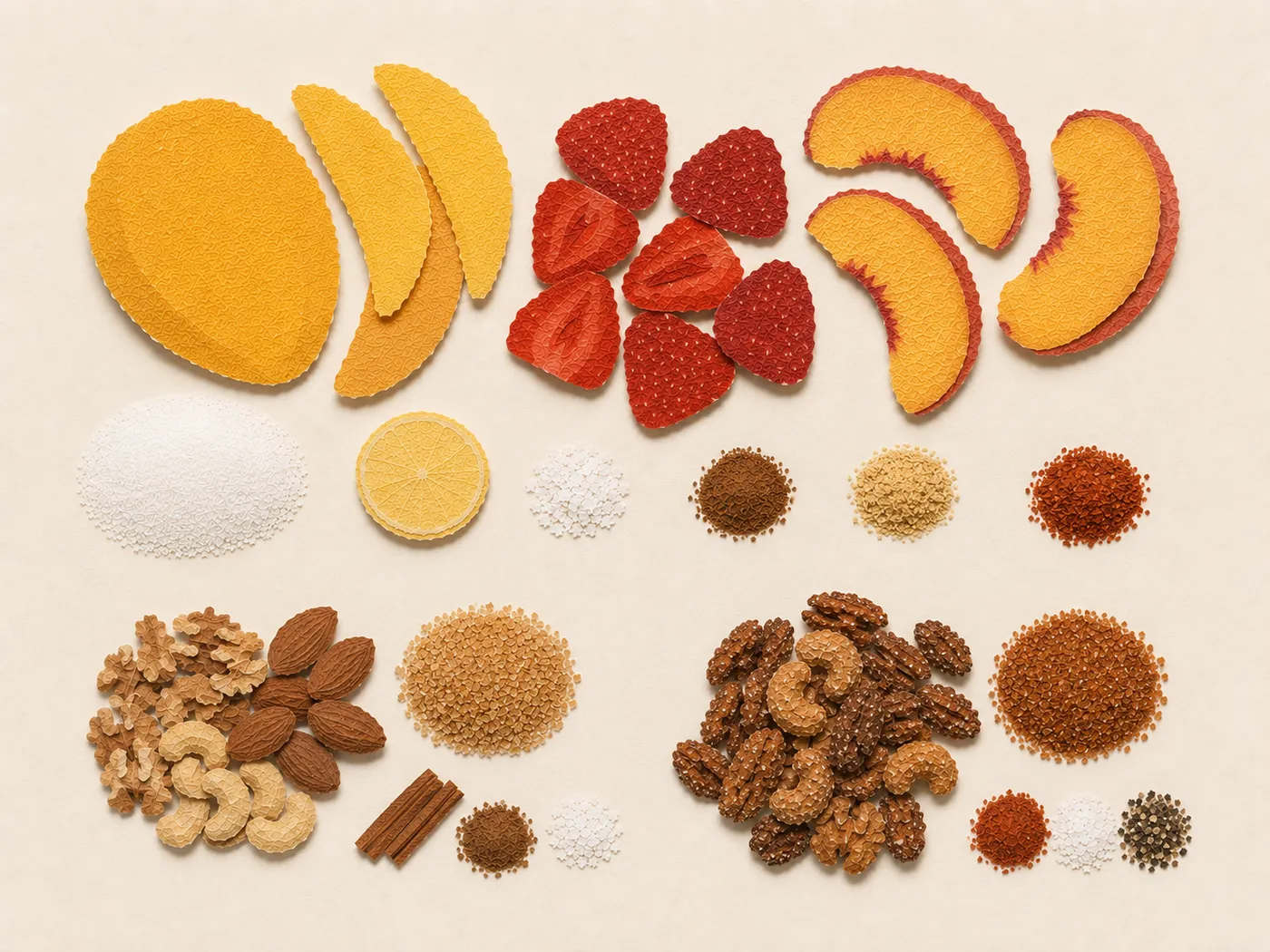
Fruit leather is a low oven doing slow work: a sweetened puree spread thin and dried until it turns chewy, glossy, and intensely fruity. It is also the kitchen's best answer to overripe fruit and the last inch of a jam jar.
Ingredients
- 2 lb (900 g) ripe fruit, peeled and trimmed as needed
- ¼ to ½ cup (50 to 100 g) sugar, to taste by fruit
- 1 tbsp lemon juice or apple cider vinegar
- pinch of salt
Instructions
- 1Pick your route by fruit. Tart or watery fruit (cranberries, mixed berries): simmer with the sugar until thick and jammy, then blend. Juicy fruit (pineapple): simmer until reduced by about half, then blend. Soft ripe fruit (papaya, mango): bring just to a boil, turn off the heat, and blend.
- 2Blend until completely smooth with the lemon juice and salt.
- 3Lightly oil a silicone mat or parchment on a rimmed sheet tray.
- 4Pour the puree on and spread it thin and even, about 1/8 inch (3 mm).
- 5Dry in a 200 °F (93 °C) oven, fan on if you have one, for 1½ to 3 hours, rotating the tray every 30 minutes.
- 6The leather is done when the surface is set and slightly tacky but no longer wet, and it peels cleanly off the mat.
- 7Cool, then cut or tear into strips. Roll in parchment and store airtight: 1 to 2 weeks at room temperature, a month refrigerated.
Cook's Note
Check at the 90 minute mark by touching the center, not the edge. If your finger comes away clean but the surface still gives slightly, pull it. Overdried leather turns to cracker; it still tastes good broken over yogurt.
How to Use This
Tear it into lunchbox strips, or cut neat ribbons to garnish cakes and plated desserts. The same drying method rescues leftovers: thin a few spoonfuls of jam with water and dry it the same way, and overripe fruit that is past the fruit bowl makes the most flavorful leather of all. A savory version works too: ketchup stirred with a little sriracha dries into a garnish leather for burgers.
Why This Method Works
An oven at 93 °C (200 °F) evaporates water without cooking the fruit any further, so the flavor concentrates instead of changing. Sugar and the fruit's own pectin keep the dried sheet flexible rather than brittle, and the acid keeps the color bright and the sweetness in check. Thin, even spreading is the whole game: thick patches stay wet while thin edges turn to chips.
Make It Yours
- Warm spices change the whole character: a pinch of allspice, nutmeg, ginger, or cayenne goes in at the blending stage
- Swirl two purees together on the tray for a marbled leather
- A squeeze of lime instead of lemon brightens tropical fruit
- Want it fancier? Ask Jeff for pairings that suit your fruit
- Savory leather: the same low-oven dry works on strained tomato sauce or ketchup. Spread day-old, strained ketchup about 4 mm thick on an oiled silicone mat and dry at 90 C (195 F) for about 1 hour, rotating once, for a pliable savory leather to tear over plates.