Techniques
How to Make Pan Gravy
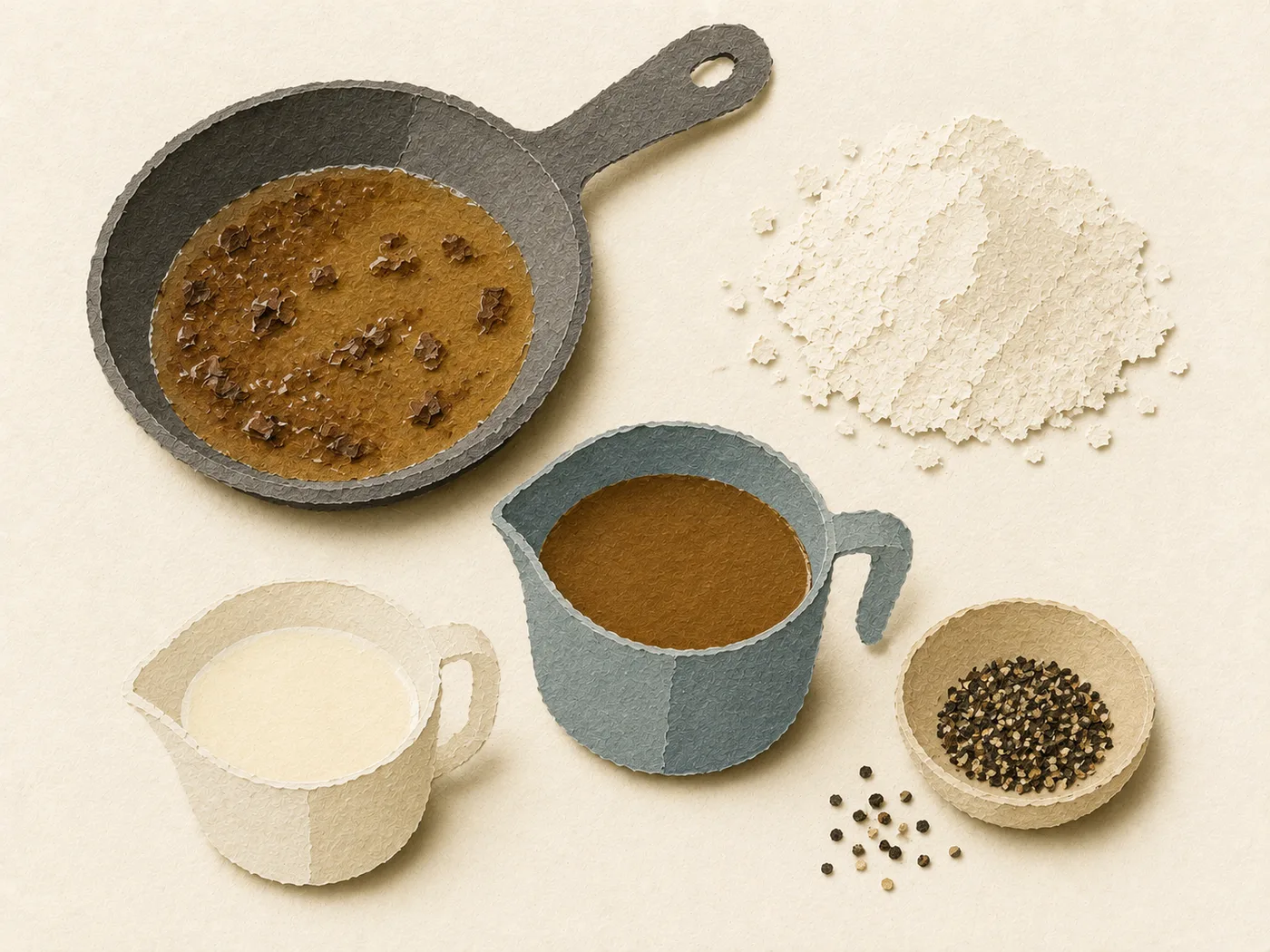
Pan gravy is a sauce thickened with a roux, equal parts fat and flour cooked together, then loosened with milk or stock into something pourable. The fat can come from rendered meat, drippings, or a spoonful of lard or butter, and the flour cooked into it does the thickening. It comes together in one pan in the time it takes biscuits to bake: cook the flour in the fat, whisk in the liquid, and simmer until it coats a spoon.
Instructions
- 1Render or melt your fat in a wide, heavy pan over medium heat, about 2 tbsp fat per 1 cup (240 ml) of liquid you plan to add.
- 2If you are using meat, brown it first (sausage, chorizo, bacon), then cook any aromatics like onion or garlic in the rendered fat until soft.
- 3Sprinkle in the flour, roughly 2 tbsp per 1 cup (240 ml) of liquid for a medium gravy, and whisk it into the fat to form a smooth paste.
- 4Cook the flour 2 to 3 minutes, whisking, until it smells nutty and loses its raw, pasty taste and turns a shade darker.
- 5Pour in the liquid gradually, a splash at a time at first, whisking constantly so no lumps set up.
- 6Once all the liquid is in and smooth, bring it up to a gentle simmer; it will thicken noticeably as it approaches the bubble.
- 7Simmer 4 to 6 minutes, whisking often, until the gravy coats the back of a spoon and holds a line when you draw a finger through it.
- 8Season with salt and pepper, and thin with a splash more warm liquid if it tightened too far.
Cook's Note
Add the liquid slowly and keep whisking, because lumps form when cold liquid hits hot roux all at once and the flour seizes into knots before it can spread. Get the first splashes fully smooth before you pour the rest. If a few lumps do form, a quick pass with a whisk or a blender pulls it back together.
How to Use This
This is the base technique behind the site's gravies. Milk-based versions like Smoked Milk Gravy lean on the same roux-and-milk mechanism as a béchamel, then get puréed smooth; Chorizo Gravy builds the roux directly in rendered chorizo and bacon fat. Ladle a milk gravy over Biscuits & Gravy, or stir diced meat into a finished base the way Pastrami Gravy does, to turn one sauce into a plate.
Why This Method Works
Flour thickens by starch: when the granules heat in liquid they swell and burst, trapping water and turning a thin liquid into a sauce that coats. Cooking the flour in fat first coats each grain so it disperses without clumping, and those couple of minutes over heat cook off the raw, chalky taste of uncooked starch. The gravy sets up as it nears a simmer because that is the temperature at which the starch fully gelates, and it keeps tightening as it cools, which is why a gravy that looks right in the pan can feel too thick on the plate.
Make It Yours
- Milk gravy: Use milk or a milk-and-cream blend as the liquid for a pale, rich gravy, the base under Smoked Milk Gravy and its béchamel roots.
- Sausage gravy: Brown crumbled pork sausage or chorizo first and build the roux in the rendered fat, as in Chorizo Gravy, so the meat seasons the whole sauce.
- Smoky gravy: Stir in smoked paprika, chipotle, or a few drops of liquid smoke with the aromatics for a low-fire, deli-counter depth.
- Stock gravy: Swap the milk for chicken or beef stock when you want a leaner, savory gravy for meat and potatoes rather than biscuits.
- Meaty finish: Fold diced cooked meat like pastrami or sausage into the finished gravy and warm through, so each bite has texture.
Keep Cooking