
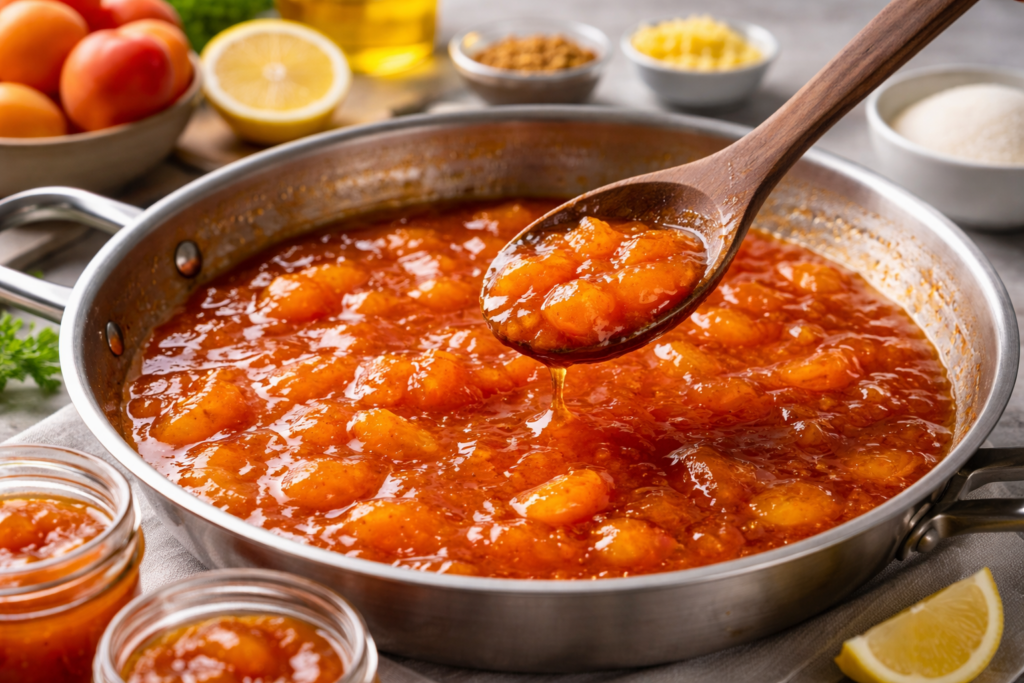
A good small-batch jam should taste like fruit first, not just sugar. This method keeps the process simple: cook the fruit down, balance it with sugar and acid, and stop when it turns glossy, thick enough to hold, and still bright.
Recipe
Cook’s Note: Small-batch jam works best when you watch the fruit instead of chasing a fixed time. Some fruit breaks down fast, some needs more help, and the finish matters more than the clock.
Prep: 30 Minutes
Cook: 25 Minutes
Serves: 3-4
Best used for: apricots, peaches, plums, berries, cherries, and mixed fruit
Core Formula
- 1 kg fruit, prepared
- 400 to 700 g sugar
- 1 to 2 tbsp lemon juice
- optional flavor add-ins, depending on the fruit
Instructions
- Wash and prep the fruit by pitting, peeling, or chopping as needed.
- Add the fruit and sugar to a wide pot and toss gently.
- Let it sit until the fruit starts releasing juice.
- Set the pot over medium heat and bring it to a steady simmer.
- Stir often and skim off foam if needed.
- Add lemon juice once the fruit has softened and the mixture starts to thicken.
- Keep cooking until the jam looks glossy and falls from the spoon in thicker sheets instead of a thin stream.
- Cool a small spoonful on a plate to check the texture.
- Transfer to clean jars once the jam reaches the texture you want.
Why This Method Works
Sugar draws out the fruit juices first, which helps the jam cook more evenly. Acid sharpens the flavor and helps the texture feel cleaner, while a wide pot speeds up evaporation so the fruit concentrates instead of stewing.
Sugar Guide
Lower sugar: softer set, brighter fruit flavor, shorter shelf life once opened
Higher sugar: firmer set, sweeter finish, longer hold
Best rule:
- use 400 to 500 g sugar for sweeter fruit
- use 550 to 700 g sugar for tart fruit or firmer set
Acid Guide
Use lemon juice when:
- the fruit tastes flat
- the jam feels too sweet
- the texture needs more lift
- the fruit is very ripe and soft
Best rule:
- start with 1 tbsp
- add the second tablespoon only if the jam still tastes dull
Best Fruits for This Rule
- apricots
- peaches
- plums
- nectarines
- strawberries
- raspberries
- cherries
- blueberries
- mixed stone fruit
Fruits That May Need More Help
These can still work, but may need longer cooking, more acid, or a thicker finish:
- pears
- apples
- figs
- very watery berries
- low-acid mixed fruit
Texture Guide
Chunkier jam: cook less and leave the fruit in larger pieces
Smoother jam: mash part of the fruit as it cooks
Looser jam: stop earlier
Firmer jam: cook longer, but do not let the fruit turn dull or sticky
How to Know It’s Ready
Look for:
- a glossy surface
- slower bubbles
- thicker drips from the spoon
- a spoonful that wrinkles slightly or holds its shape better after cooling
Best rule:
jam should thicken after cooling, so stop a little before it feels fully set in the pot.
What to Avoid
- cooking over heat that is too high
- using a narrow pot
- skipping the acid entirely
- stopping before enough moisture cooks off
- cooking so long that the fruit loses its fresh flavor
- judging the final texture while the jam is still boiling hot
Make It Yours
- add vanilla for a rounder finish
- add ginger for warmth
- add citrus zest for brightness
- add cardamom for stone fruit
- leave the fruit chunky or mash it more depending on the texture you want
Flavor Pairing Ideas
Apricot: vanilla, lemon, ginger
Peach: vanilla, cinnamon, lemon
Plum: cardamom, orange, ginger
Berry: lemon, mint, black pepper
Cherry: almond, vanilla, orange
Kitchen Connections
Method Rule: This is a core Dinner Spice method for turning fruit into small-batch jam with balanced sweetness, acid, and texture.
Next Dish: Try Apricot Jam next for a direct use.