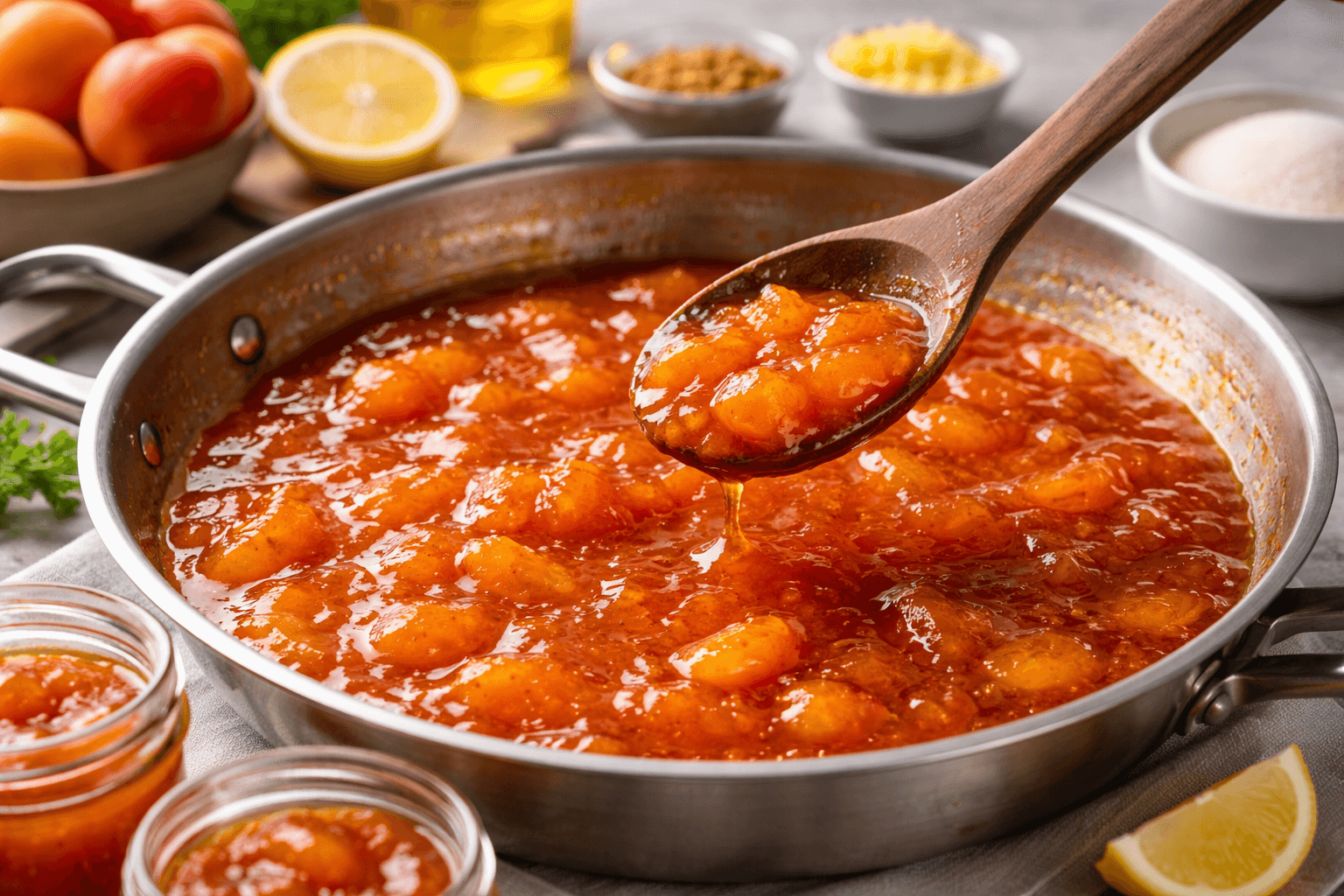
The small-batch jam rule is a proportion guide for turning fruit into a bright, spoonable refrigerator jam without making a full preserving project out of it. Start with prepared fruit, use enough sugar to draw out juice and give the jam body, add lemon juice to keep the flavor lively, then cook until the fruit looks glossy and falls from the spoon in soft sheets.
This is not one fixed jam recipe. It is the method behind quick apricot, plum, berry, peach, or mixed-fruit batches when you want the fruit to stay clear and recognizable instead of cooked down into something flat.
Small-Batch Jam Rule
Ingredients
- 1 kg fruit prepared
- 400 to 700 g sugar
- 1 to 2 tbsp lemon juice
- optional flavor add-ins depending on the fruit
Instructions
- Wash and prep the fruit by pitting, peeling, or chopping as needed.
- Add the fruit and sugar to a wide pot and toss gently.
- Let it sit until the fruit starts releasing juice.
- Set the pot over medium heat and bring it to a steady simmer.
- Stir often and skim off foam if needed.
- Add lemon juice once the fruit has softened and the mixture starts to thicken.
- Keep cooking until the jam looks glossy and falls from the spoon in thicker sheets instead of a thin stream.
- Cool a small spoonful on a plate to check the texture.
- Transfer to clean jars once the jam reaches the texture you want.
Best Served With
Best served with: buttered toast, warm biscuits, blini, crepes, plain yogurt, pound cake, rice pudding, cottage cheese fritters, or a simple cheese plate.
Cook’s Note: Watch the fruit, not the clock. Some fruit breaks down quickly, some needs more time, and the finish matters more than exact minutes. When the jam turns glossy and falls from the spoon in thicker drops or soft sheets instead of a thin stream, start checking the set.
Why This Rule Works
Small-batch jam works because fruit, sugar, acid, and evaporation all have jobs. Sugar pulls juice from the fruit, helps it cook evenly, and gives the jam body. Lemon juice sharpens the flavor so the fruit does not taste flat. A wide pot helps moisture cook off quickly, so the jam thickens before the fruit loses its brightness.
The sugar range is what makes this a rule instead of one locked recipe. Softer, sweeter fruit can use less sugar. Tart, watery, or delicate fruit may need more structure. The goal is not to make every batch taste the same; it is to keep the fruit clear, spoonable, and balanced.
How to Use This Rule
Use this method when you have a small amount of fruit and want a quick refrigerator jam. Start with about 1 kilogram of prepared fruit, then use 400 to 700 grams of sugar depending on how sweet, tart, watery, or delicate the fruit is. Add lemon juice once the fruit has softened and the mixture has started to thicken.
For ripe berries, apricots, peaches, and plums, start toward the lower end of the sugar range. For very tart fruit, watery fruit, or a batch that tastes flat after cooking, move higher in the range and adjust with lemon juice.
This is a refrigerator method, not a tested shelf-stable canning formula. Store the finished jam cold unless you are following a proper canning recipe.
How to Know the Jam Is Ready
The jam should look glossy, slightly thickened, and heavier than syrup. When you lift the spoon, it should fall in slow drops or soft sheets instead of running off in a thin stream.
For a better check, spoon a little jam onto a cold plate and let it sit for a minute. If it holds softly and wrinkles slightly when pushed, it is ready. If it runs immediately, keep cooking. If it feels stiff, sticky, or dull, it likely went too far.
Make It Yours
Choose the sugar level based on the fruit. Use less sugar for ripe berries, apricots, peaches, and other fruit that already tastes sweet and full. Use more sugar for tart fruit, watery fruit, or batches that need more body.
Add flavor only after the fruit still tastes like itself. Vanilla gives the jam a rounder finish. Ginger adds warmth, especially with peach, plum, pear, or apricot. Citrus zest makes berry and stone-fruit jams brighter. Cardamom works well with apricot, plum, peach, and pear, but use it lightly so it does not take over.
Control the texture before the jam sets. Leave the fruit chunky for a rustic spoon jam, mash part of it for a softer spread, or blend a small portion if you want a smoother finish without losing all the fruit texture.
A few easy directions:
- Apricot, lemon juice, and vanilla for a soft, sunny jam.
- Plum, ginger, and lemon zest for a warmer, sharper batch.
- Strawberry, lemon juice, and citrus zest for a brighter spoon jam.
- Peach, cardamom, and lemon juice for a rounder stone-fruit version.
Common Mistakes
- Using too much sugar with delicate fruit.
- Cooking too hard instead of holding a steady simmer.
- Relying only on time instead of checking texture.
- Skipping lemon juice when the fruit tastes flat.
- Using a narrow pot that slows evaporation.
- Cooking until the jam is fully thick in the pot instead of remembering it firms more as it cools.
Pairing Suggestion
Pair small-batch jam with black tea, coffee, sparkling water with lemon, or a not-too-sweet dessert wine when serving it with biscuits, blini, crepes, yogurt, or cake. For something savory, spoon it beside soft cheese, salty butter, or roasted meat where the fruit can cut through the richness.
Leftover Strategy
Store small-batch jam in clean jars in the refrigerator and use it while the flavor still tastes bright. Spoon it over yogurt, spread it on toast, fold it into crepes, add it to cottage cheese fritters, or warm a little with water or lemon juice to make a quick fruit sauce.
If the jam thickens too much in the fridge, loosen a spoonful with warm water or lemon juice. If it tastes dull, use it in glazes, sauces, or fillings instead of as a fresh spoon jam.
Kitchen Connections
Method: Dinner Spice Methods.
Next Dish: Apricot Jam.