Techniques
How to Build a Spice Rub or Blend
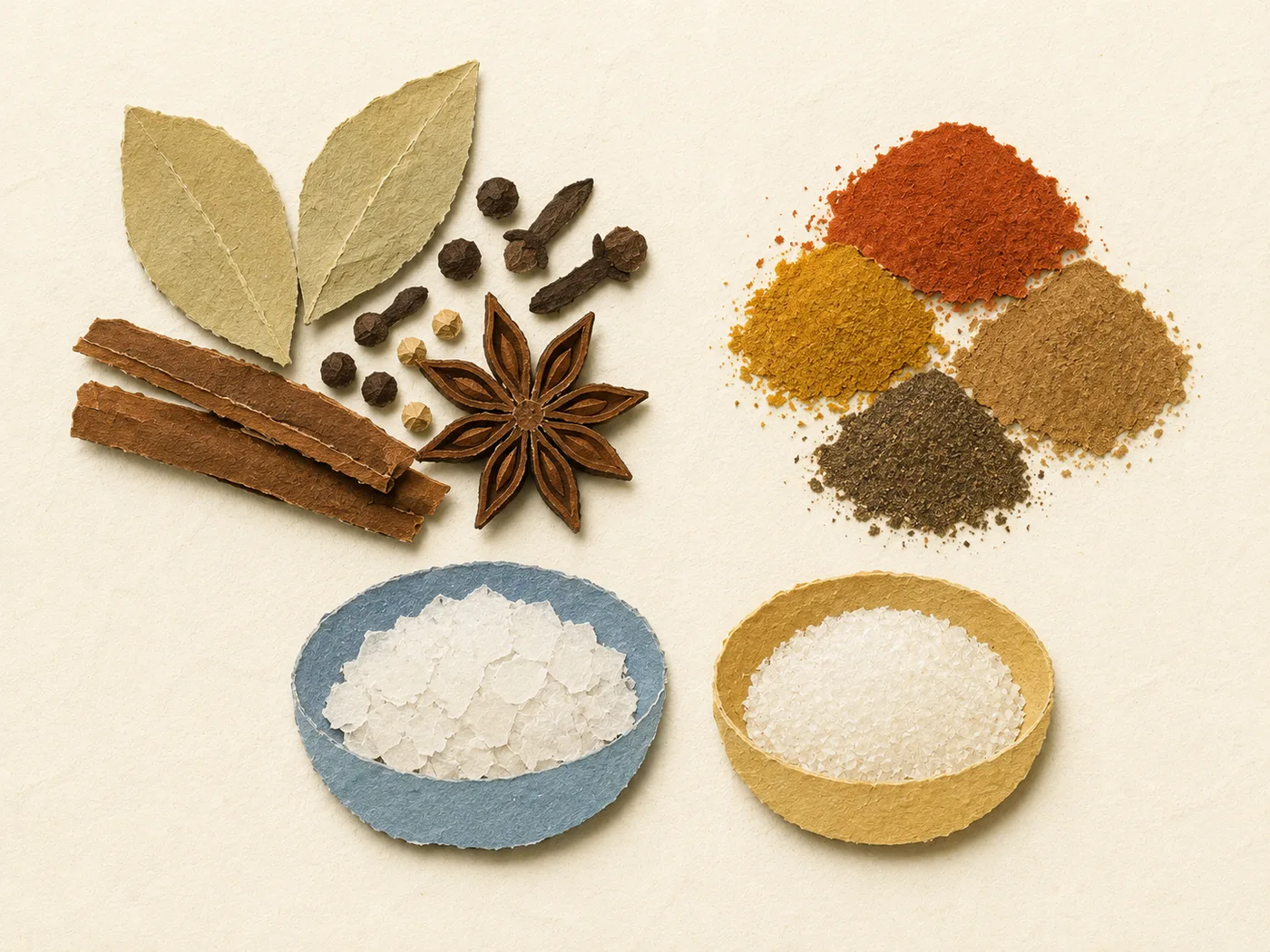
A rub is a dry blend of salt, spices, and aromatics that seasons the surface of meat, fish, or vegetables and builds a crust as it cooks. A good one balances four things: salt to season, a little sugar to round the edges and help the surface brown, savory aromatics like garlic and onion for depth, and heat from chiles or pepper. Grind whole spices yourself when you can, since the oils that carry the flavor start fading the moment they are cracked open.
Instructions
- 1Start whole where it counts. Buy seeds like cumin, coriander, and fennel whole; they hold their oils far longer than pre-ground.
- 2Toast the whole spices in a dry skillet over medium heat, shaking often, until they smell nutty and fragrant, 2 to 4 minutes. Pull them off before they smoke.
- 3Grind the toasted spices in a spice grinder or mortar. Stop at a coarse crack if you want texture in the crust, or take it to a powder for even coverage.
- 4Build on the four anchors: salt to season, a smaller measure of sugar to round it out and help browning, aromatics like granulated garlic and onion, and heat from cayenne, chili powder, or black pepper.
- 5Weigh rather than eyeball. Aim for salt in the range of 25 to 35 percent of the blend by weight, then adjust the rest to taste.
- 6Combine everything in a bowl and mix until the color is uniform with no streaks of one spice.
- 7Taste the raw blend on a fingertip, or sprinkle a pinch on a bite of cooked food, and correct before you commit it to a whole batch.
- 8Store the finished blend airtight, in a cool, dark spot away from the stove. Label it with the date and use it within about 6 months while it still tastes sharp.
Cook's Note
Toast whole spices just until fragrant and pull them the second they smell nutty. Take them past that point and the oils turn bitter, and no amount of salt or sugar downstream will pull the blend back. If you are grinding for texture, stop at a coarse crack rather than a fine powder so the crust has something to hold onto.
How to Use This
This method underpins the site's rub and blend recipes. Use it as the base technique for the BBQ Seasoning, the Cajun Fry Seasoning, the Carne Asada Dry Rub (the wet-paste version), and the Rub Spicy Tuna (where whole seeds get toasted and ground first). It also connects to related building blocks like the Smoked Salt Mix and the Nashville Hot Spice, both of which fold into or stand in for the salt-and-heat portions of a blend.
Why This Method Works
Toasting cracks the tough cell walls inside whole seeds and vaporizes their volatile oils, so a quick turn in a dry pan deepens and rounds out the flavor before the spice ever hits the food. Grinding right after toasting captures those oils at their peak, because a ground spice has far more exposed surface and loses aroma to the air within months. Salt seasons and draws surface moisture into a thin slurry that dries into crust, sugar browns through the Maillard reaction at moderate heat and lends color, and the aromatics and heat fill in the body, which is why the four categories are treated as a formula rather than a loose pile of jars.
Make It Yours
- Wet paste: loosen a dry blend with a little oil and vinegar into a spreadable paste, the way the Carne Asada Dry Rub does, so it clings and carries flavor deeper before a hard sear.
- Smoke without a smoker: lean on smoked paprika and a touch of hickory smoke powder, as in the BBQ Seasoning, to get a smoky base indoors.
- Chili-forward: make a good dark chili powder the backbone, the way the Cajun Fry Seasoning does, for depth under the heat rather than raw burn.
- Nutty and textured: grind toasted sesame, fennel, and coriander to a coarse crack, as in the Rub Spicy Tuna, for a seedy crust that sears up with real character.
- Dial the heat: cayenne sets the ceiling, so scale it up or down to taste and wear gloves when you are mixing a batch that leans hot.