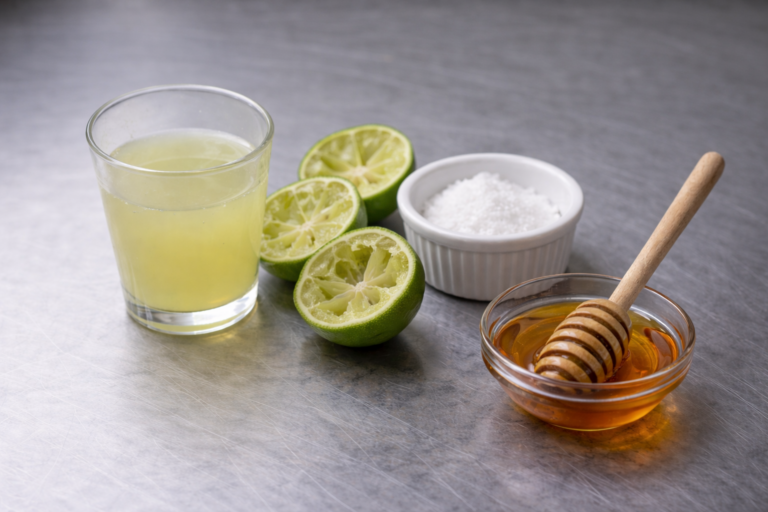
Some dinners are good right up until they hit the plate. This quick savory glaze gives them the final lift: glossy, savory, a little sweet, and strong enough to make plain salmon, chicken, tofu, mushrooms, eggplant, or roasted vegetables feel worth repeating.
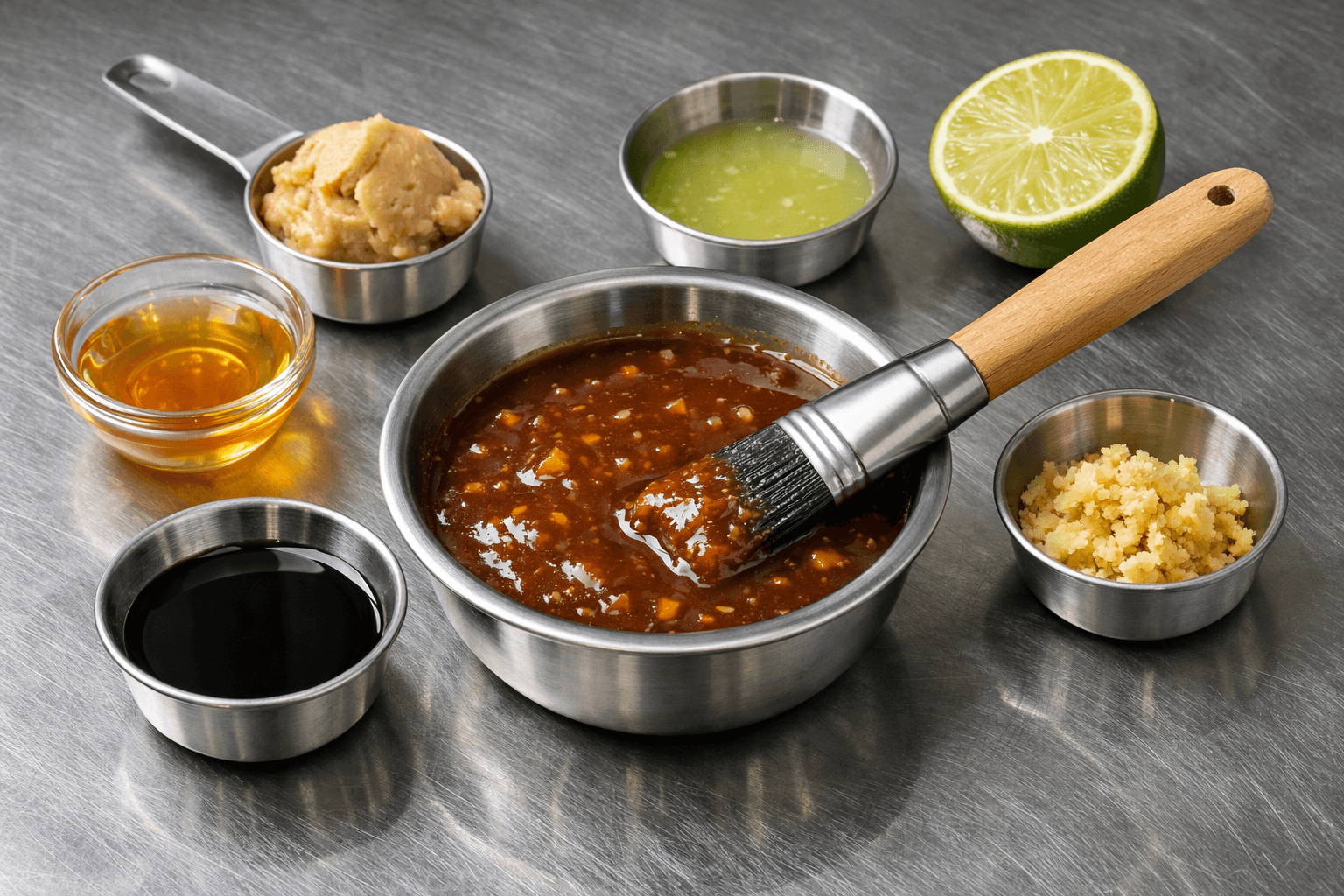
Best served with: salmon, chicken thighs, tofu, eggplant, mushrooms, green beans, carrots, roasted broccoli, steamed rice, or quick pickles.
Quick Savory Glaze
Ingredients
- 2 tbsp White Miso
- 1 tbsp honey
- 1 tbsp soy sauce
- 1 tbsp Lime Juice
- 1 tsp ginger grated
- 1 tsp oil or water if needed to loosen
- 1 clove garlic grated
Instructions
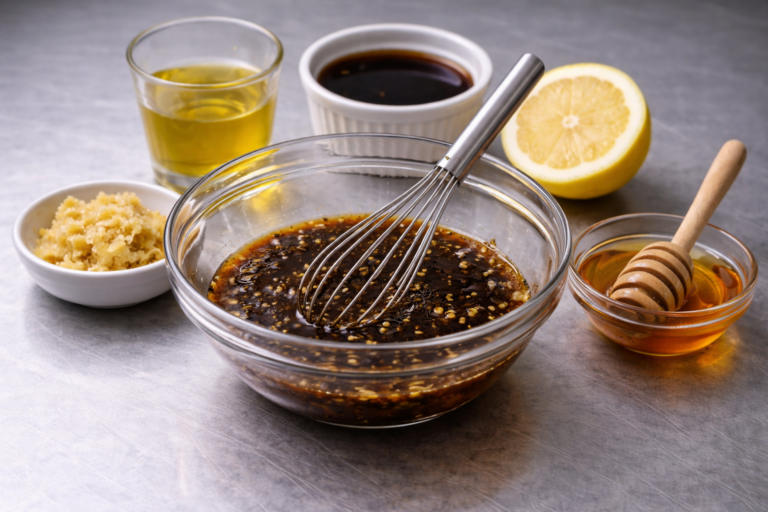
- Whisk everything until smooth.
- Loosen with a little water or oil if needed.
- Brush onto fish, chicken, tofu, or vegetables.
- Cook under moderate-high heat until glossy and lightly caramelized.
- Add a second coat near the end if you want a thicker finish.
Cook’s Note: Keep the heat moderate once the glaze hits the pan, oven, or broiler. Miso, honey, and soy can darken quickly, so light coats work better than one heavy layer. Brush once near the end of cooking, let it set, then add a second thin coat if you want more shine.
Why This Recipe Works
This glaze works because it gives you depth, sweetness, salt, and brightness in one fast move. White miso brings savory backbone, honey gives the glaze shine and cling, soy sauce deepens the flavor, and lime juice keeps the finish from tasting heavy.
The balance matters. Too much sweetness makes a glaze sticky and flat; too much salt makes it harsh. This version is concentrated enough to wake up simple food, but still tastes savory, not sugary.
How to Use This Glaze
Use this when dinner needs a stronger finish, not a full sauce. Brush it onto salmon, chicken thighs, tofu, mushrooms, eggplant, carrots, broccoli, or green beans near the end of cooking so it can set without burning.
You can also warm the glaze briefly in a small pan until glossy, then spoon it over cooked food. Use just enough to coat the surface. The point is to make dinner taste finished, not buried.
Skip it on very delicate fish, watery vegetables, or anything that should stay crisp and dry. It is also less useful on dishes that already have a heavy sauce or strong seasoning.
Make It Yours
Change the sweetener based on the finish you want. Honey gives the glossiest, stickiest coating. Maple syrup tastes deeper and warmer. Brown sugar makes the glaze darker and more caramel-like, but it can burn faster, so keep the heat gentle.
Choose the acid based on the plate. Lime keeps the glaze sharp and lively, especially with salmon, tofu, chicken, and rice bowls. Lemon makes it cleaner and softer. Rice vinegar gives a lighter, less citrusy finish when you want the glaze to stay savory.
Use ginger when you want brightness and warmth. Use garlic when you want a rounder savory edge. Chili flakes, chili crisp, or sriracha add heat, but keep them controlled so the glaze still tastes balanced.
A few easy directions:
- Miso, honey, lime, and ginger for salmon, tofu, rice bowls, and green beans.
- Miso, maple, soy sauce, and garlic for mushrooms, eggplant, chicken thighs, and broccoli.
- Miso, honey, rice vinegar, and chili flakes for tofu, carrots, cabbage, and roasted vegetables.
- Miso, lime, garlic, and sriracha for salmon, chicken, rice bowls, and broiled vegetables.
Pairing Suggestion
Pair glazed food with something fresh, plain, or acidic so the sweet-savory finish stays balanced. Steamed rice, cucumber salad, quick pickles, iced green tea, cold beer, or sparkling water with citrus all work well beside the glossy richness.
Leftover Strategy
Store unused glaze in the refrigerator for up to 5 days and stir before using. If it thickens in the cold, loosen it with a small splash of water or lime juice. Do not reuse glaze that has already touched raw protein.
Use leftover clean glaze on salmon, chicken, tofu, mushrooms, eggplant, carrots, broccoli, or rice bowls. If the food already tastes rich or salty enough, add citrus, herbs, or pickles instead of more glaze.
Kitchen Connections
Foundation: Dinner Spice Foundations.
Next Dishes: Honey-Sriracha-Glazed Salmon; Miso-Lime-Glazed Salmon.