
A good pasta dinner starts before the sauce. Plenty of water, enough salt, the right doneness, and finishing the pasta in the sauce are what make it feel complete instead of flat or slippery.
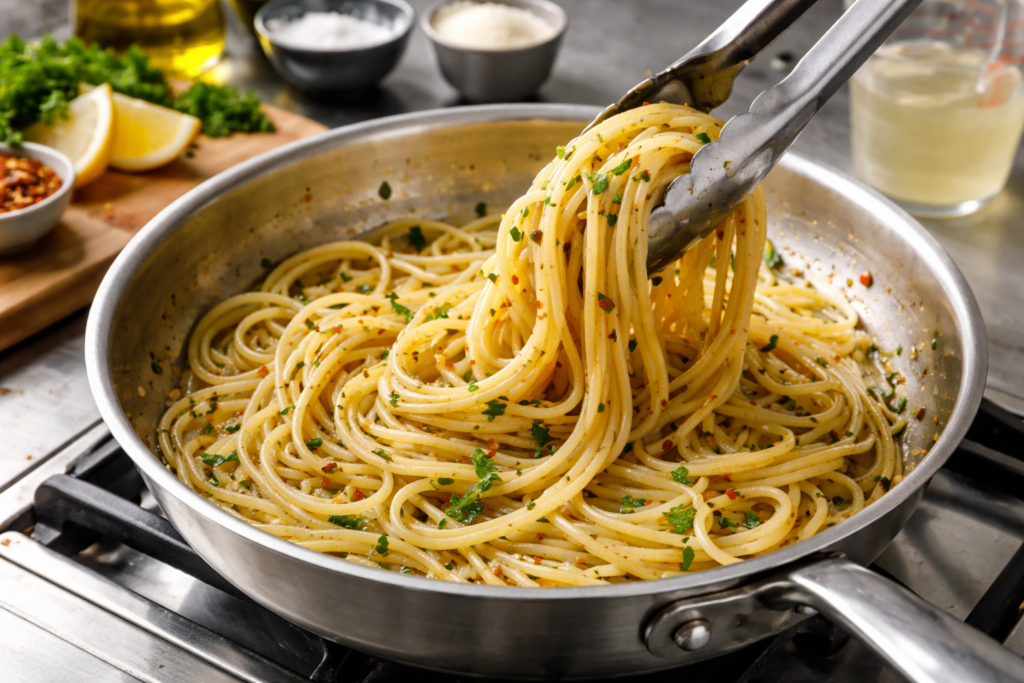
Recipe
Cook’s Note: Cook the pasta until just shy of where you want it, then finish it in the sauce. The best test for al dente is tasting it: the pasta should feel firm and toothsome, not hard, with no chalky center. Save pasta water before draining, because that starch is what helps the sauce turn glossy and cling.
Best served with: sauces that can cling, loosen, and finish in the pan
Pasta Formula
- 450 g dried pasta
- 4 quarts water
- 1 1/2 to 2 tbsp kosher salt
- sauce, ready to finish the pasta
- reserved pasta water, as needed
Steps
- Bring a large pot of water to a full boil.
- Salt the water just before adding the pasta.
- Add the pasta and stir well for the first minute.
- Cook until just shy of al dente, checking by tasting instead of relying only on the box.
- Reserve at least 240 ml pasta water before draining.
- Move the pasta straight into the sauce or into a pan where the sauce is waiting.
- Add a splash of pasta water and toss until the sauce turns glossy and coats the pasta.
- Serve at once.
Why This Method Works
Plenty of water helps keep the pasta from clumping as it cooks. Salt seasons it properly, finishing at al dente keeps it from turning soft in the sauce, and pasta water helps bind the sauce so it coats instead of pooling.
Portion Guide
- Main course: 100 to 125 g dried pasta per person
- Smaller first course: about 75 g dried pasta per person
Water and Salt Rule
Use:
- 4 quarts water for 450 g pasta
- 1 1/2 to 2 tbsp kosher salt for that amount
A good shortcut: the water should taste well salted, not flat.
What to Do After Draining
For hot pasta: do not rinse. Move it straight into the sauce and use pasta water if needed.
For cold pasta salad: rinse lightly with cold water after draining.
What to Avoid
- too little water
- under-salting the pot
- trusting the package time without tasting
- rinsing hot pasta
- adding oil to the water or the drained pasta
- draining without saving pasta water
Make It Yours
- Use short pasta for chunkier sauces and vegetable-heavy dishes.
- Use long pasta for smoother sauces and lighter finishes.
- Pull the pasta earlier if it will finish longer in the sauce.
- Save more pasta water than you think you need.
Kitchen Connections
Method Rule: This is a core Dinner Spice method for boiling, salting, and finishing pasta properly.
Next Dish: Try Garlicky Broccoli Pasta next for a direct use.